Wildfire is a common phenomenon in the greater Jerusalem area (which encompasses the Jerusalem mountains and the Judean lowlands), and every year dozens of fire incidents occur here. Most of these fires are on a small scale, but the fire that broke out in the beginning of May 2025 was of a magnitude unprecedented even to the most veteran KKL-JNF forest rangers.
Nitai Zecharia, KKL-JNF’s manager of the Ben Shemen area and Canada Park, says that the fire had actually started a week before, probably due to the activity of farmers on an extremely hot and dry day. KKL-JNF’s forest rangers and firefighters had managed to tackle the flames in one day, but they did not know that the worst was still ahead of them.
The fire continued to burn underground within the roots of the trees, and a week later the flames again broke out on a very hot day with strong winds. The fire spread rapidly and burned out of control.
More than 1,500 firefighters, including 80 forest rangers and firefighters of KKL-JNF who arrived from all over Israel, battled the flames. Around 200 fire engines, including 12 KKL-JNF firetrucks uniquely designed to navigate forest terrain, operated in the area. Above them, 12 firefighting planes and 3 firefighting helicopters were also mobilized.
The fire spread to six main centers in the greater Jerusalem area: Neve Shalom, Mesilat Zion, the Harel Scenic Lookout (Mitzpe Harel), Canada Park, Ramat Beit Shemesh, and Highway 3. The fire also reached Highway 1, which leads from Tel Aviv to Jerusalem, and many of the drivers there had to abandon their vehicles to escape the flames.
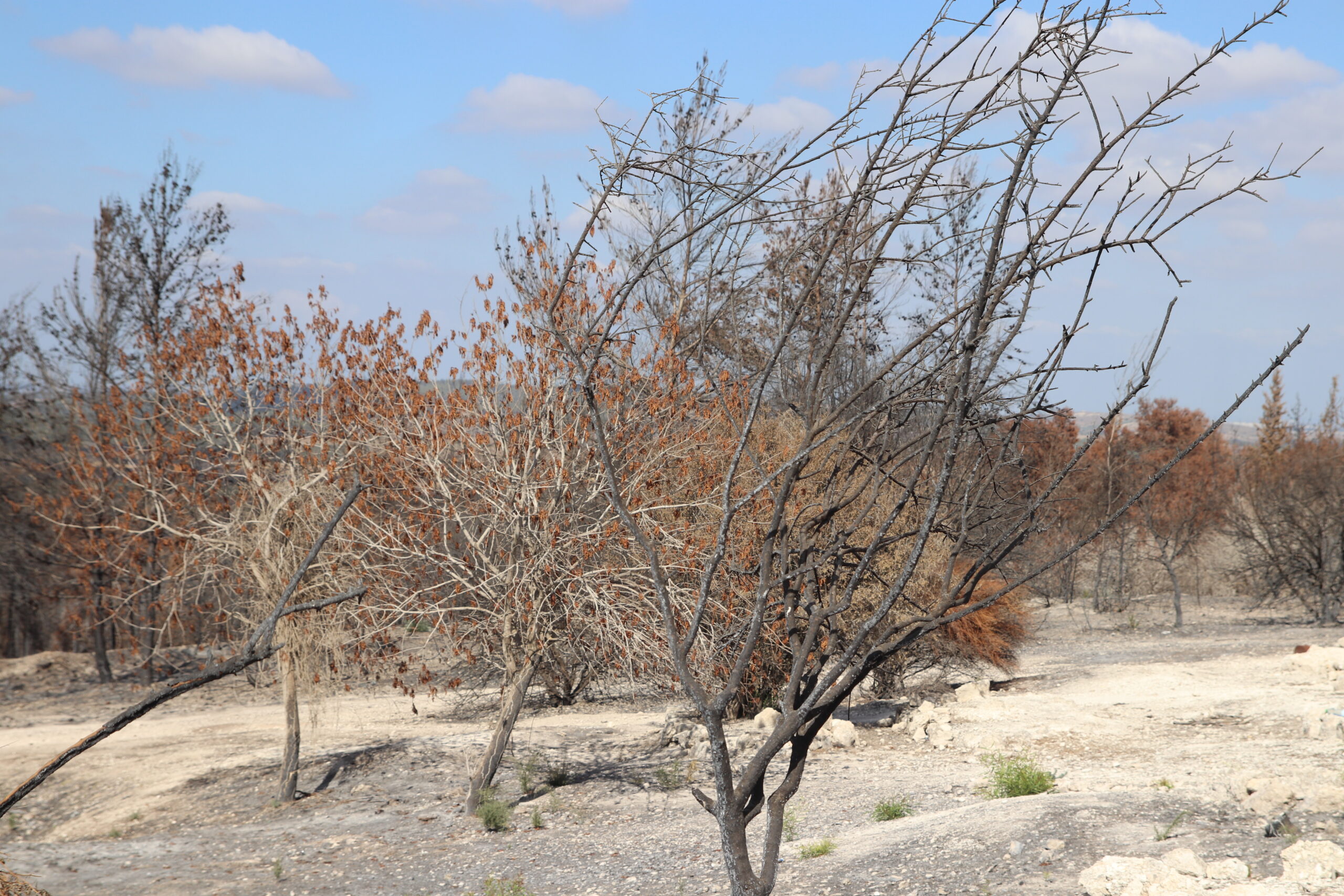
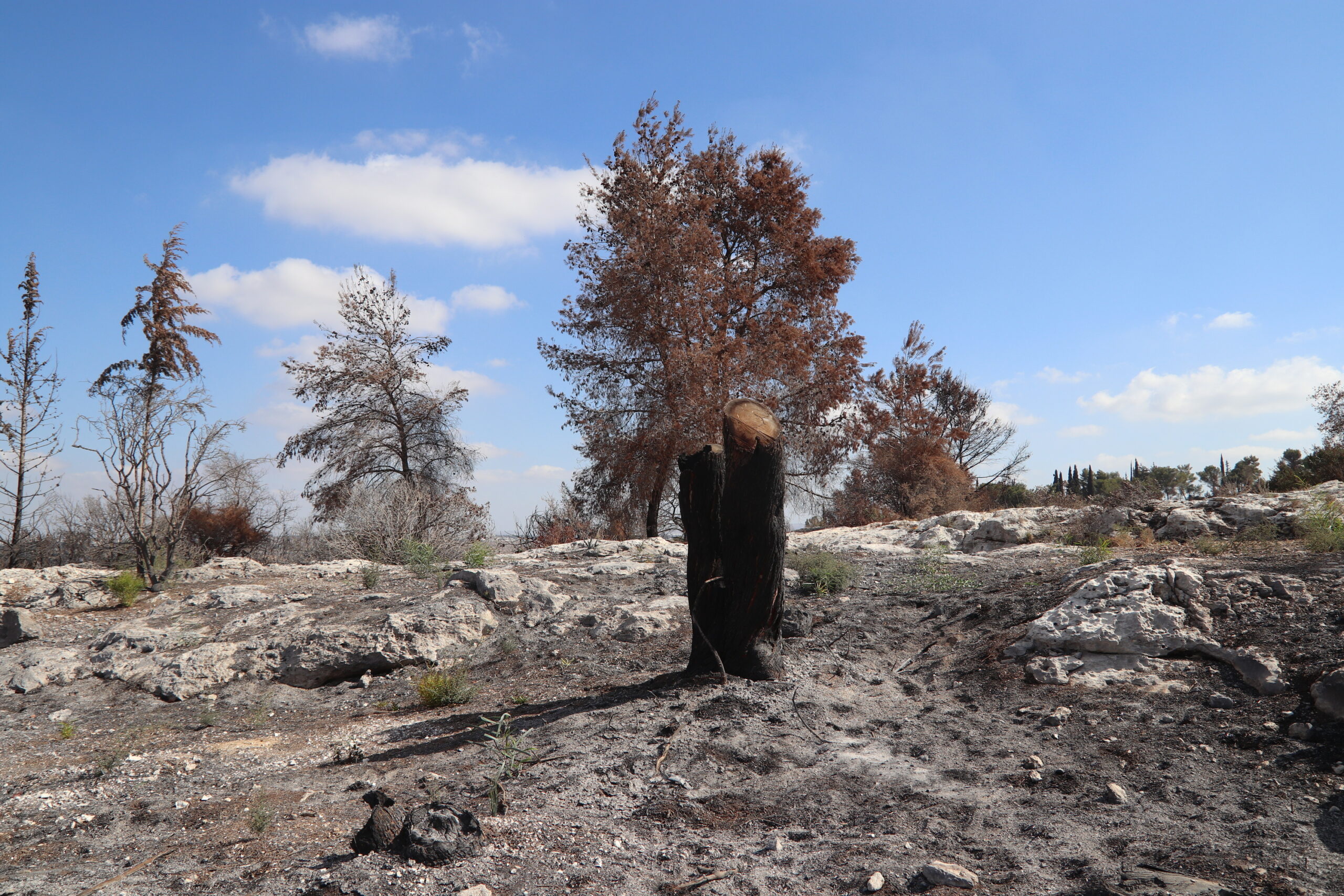
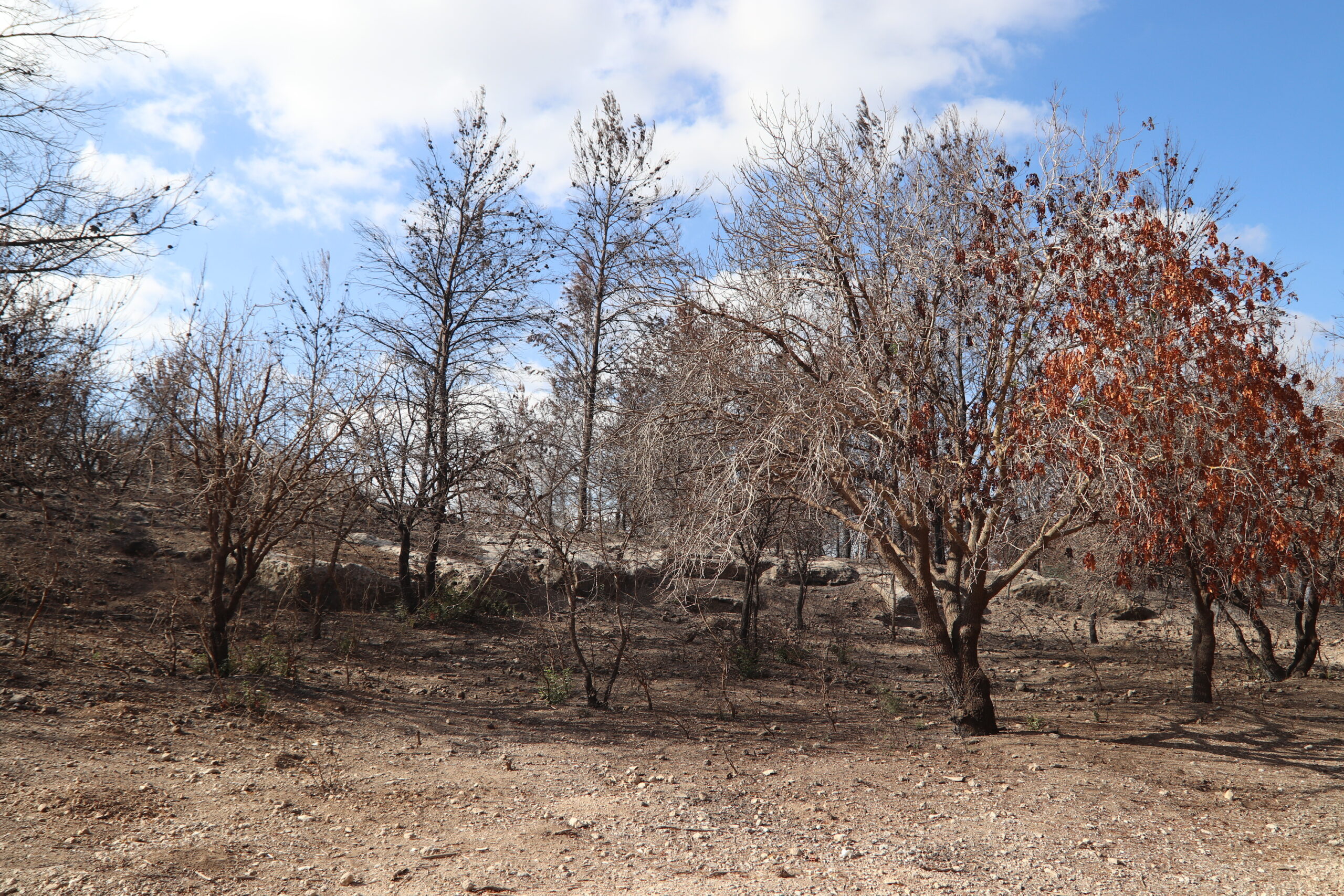
Control of the fire was gained three days later thanks to the intensive, non-stop efforts of the firefighting teams, and the fire was put out. The results of the fire were catastrophic. “We lost enormous forest areas with rich vegetation, habitats for animals, and recreation areas that serve the general public”, said Nitai Zecharia. “It is painful to walk in the forest and see the huge area that was destroyed“.
After long days of fiercely battling the flames at great risk to their lives, the KKL-JNF foresters and rangers could begin to assess the damage. They found that Canada Park had almost completely burned down and extensive areas of the Eshtaol, Anava, Martyrs and Shoresh forests had also burned. All in all, about 5,000 acres were damaged by the fire.
What most saddens Nitai about the burnt areas is the horrible damage wrought upon the Canada Park. “Sometimes the fire creates an opportunity for changing the composition of the forest in accordance with defined objectives and the ecological services intended for the area, but Canada Park was simply a perfect forest, and I wouldn’t have changed a thing in it“.
Signs of the fire are still evident even months after the events, but one can also notice new life emerging. New vegetation is growing from the roots or seeds in the area. Mediterranean forest trees with a strong system of roots – such as oak, pistacia and carob trees – have started growing new sprouts. Coniferous trees, such as pine trees, will grow from seeds dispersed from the pinecones opened by the fire’s heat. The seeds are already spread on the ground, and all that remains now is to pray for a rainy winter that will encourage them to grow.
Nitai describes the restoration process: “We first focused on removing safety hazards and clearing burned trees from alongside the roads and paths to maintain the hikers’ and workers’ safety. Now we are busy with fighting invasive species to guarantee that only the local Israeli species will regenerate in the forest”.
Simultaneously, KKL-JNF is conducting comprehensive surveys in the field to track the regeneration process. Nitai emphasizes: “Basically we are relying on natural regeneration. However, there are areas where we will choose to carry out plantings in cases when natural regeneration doesn’t sufficiently meet the forest’s objectives“.
Nitai walks along the paths of the burned forest at Canada Park, surveying the area and examining the regeneration. There are green branches already emerging from charred tree trunks and blackened ground, holding the promise of a greener future. He is grateful. “I know that we, the forest rangers of KKL-JNF, are not alone in the fight for the forest” he says. “We have partners all around the world, and together we will restore the forest back to its green and beautiful state”.